• Twitter
  • Facebook
  • Google+
  • RSS Feed

Tuesday, 25 February 2014

For our second meeting, we looked at the possible ways in which we could make the interview footage we receive more interesting to the person watching the film. Shahid suggested a brilliant idea which was that we should have the person standing in front of a Greenscreen taking about their experiences and whilst this is happening, we can have the donated footage we receive from the person behind them (Footage of them at home, with friends, when they were younger etc) to make our film more visually pleasing. We were then assigned different things to do, for example Shahid was required to produce the storyboard and I was required to do the risk assessment.

I then looked into Greenscreening a bit more, and even though i'm not the editor, I decided to look how to properly light a Greenscreen and generally watched tutorials on the setup and keying editing process.

http://www.videocopilot.net/tutorial/basic_color_keying/: VideoCopilot tutorial I watched


A YouTube video tutorial I watched on how to light a Green Screen.


Monday, 24 February 2014

For my photography idea, I looked at the work of a website called 'Disposablememoryproject.org.'. The project was looking for at the physical side of memories such as photo prints, which for me is one of the best ways of keeping memories. I recently visited my nan and we sat down together with a box of hundreds of old photos, from the early 40s to the present day. My nan, now 90, can still to this day look at each photo and reminisce in what happened that day. I found this interesting as I to could do the same with the photo's from when I was born, to the present day, however some memories for me were fragmented and forgotten and I had to be reminded of certain aspects. I found this useful in thinking about my idea a little bit more and the direction I want to go in

Idea 1: I thought about having 5 found photo's of myself from when I was born to the present day, and as the photo becomes newer, the picture becomes slightly less blurred, to suggest that I have forgotten parts of my early childhood. The first photo will be quite blurred and the last will not be blurred at all. 

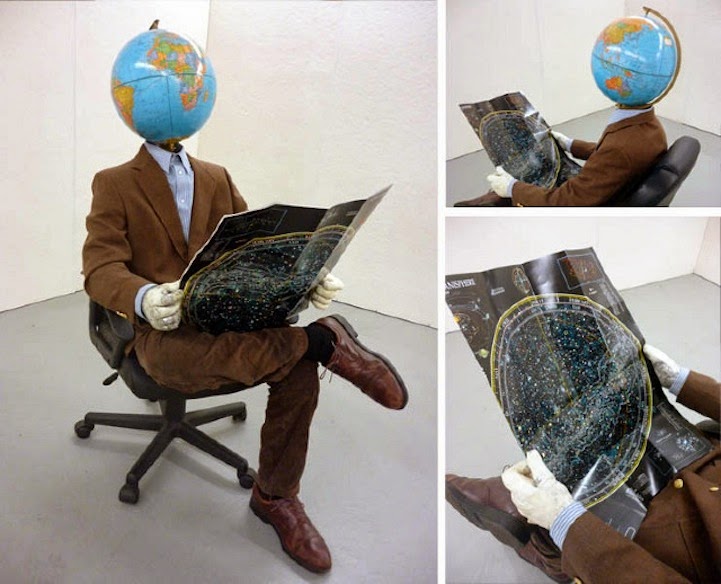
Idea 2: My second idea would be to use the idea of developed photo's and take a picture of someone, and remove the head and replace that with an image of significance, for example moving away from home or your first christmas and so forth. Each photo could be of a different person and their memory. The memory itself must be quite clear in the photo I chose to replace their head with, otherwise it will get confusing for the person viewing the piece. This idea is similar to the concept I spoke about in a previous post, where people memories are written down on cards and put in front of them, to hide their identity (video below). In addition to this, I got inspiration from a photo I found of someone's head being cleverly replaced with a globe. The photo itself is from a set of humorous photo's taken by an artist called Andy Vible, who replaced the head with various items (http://www.mymodernmet.com/profiles/blogs/andy-vible-headless-human-sculptures


Thursday, 20 February 2014

During the meeting I had with my group, we discussed the idea further and looked at creative ways we could approach the film. I chose Lauren's idea because I felt the idea had potential and there was a great suggestion of making an interesting soundtrack for the film, made up of the footage we record ourselves. The film itself is looking into the transformation from moving away from home, to coming to uni. When Lauren pitched the idea, I was initially interested in the concept and even though it seemed quite personal to Lauren, I felt as if it could apply to all students, including myself, who moved away from home, whether it be a mile or hundreds of miles.


Sunday, 16 February 2014

During my first tutorial with Leah, I got feedback that helped me think more about my idea of music and memory and it got me thinking about previous films we've watched. It reminded me of a rave video we watched that I found really interesting. It then got me thinking about raves and the sort of memories people have at them. However, instead of looking at the larger raves, I want to look at the more independent, 'underground' raves. Illegal raves are also another interesting topic.

I pictured the film starting with glitchy footage of someone dancing at a rave, and distant, muffled audio matching the footage. I know people who've been to raves and talked about how they forgot half of it because they were intoxicated. I also discovered the use of drugs at raves also, from various forums (shown below).


A great way of getting research for this, will be to ask some of my friends who regularly go to raves. I feel I will get interesting results because they will each have different memories of their experiences at raves. Depending on the feedback I get, I may go about basing the film around one person's memories.

I want to interview different people who are regular's at raves and talk about any memories they have. I will include the interview footage as a voice-over, as I want to focus more on the visuals. I also looked at glitch effects, and found them interesting and I would definitely like to incorporate them in my film. It also emphasizes the idea that memories can be forgotten and 'glitch' in time. I feel it will be interesting as some peoples memories of the events that happened will be blurred and fragmented perhaps due to being intoxicated, which I can then portray on my film.


                                                                 (The effect at the start)

I found an interesting blog about raves and the memories people share at them. Looking at this, it has perhaps given me the idea to re-enact those memories that the different people have.


Friday, 14 February 2014

During today's lesson with Joe, we were introduced to the recording studio. This has three rooms. The booth where you record. The middle space which you can also record in and finally the editing room where you record and edit the sound you record. During the session we looked at how to create foley sounds. The task given to us was to create foley sound to dub over the Pixar intro (shown below)


 We took it in turns to recording sound in the booth, and getting used to Pro Tools and putting the sound clips together. I found the process quite fun and interesting and its made me think more about my sound project and how I will go about using the sound recording room to record foley sound.
 
© 2012. Design by Main-Blogger - Blogger Template and Blogging Stuff